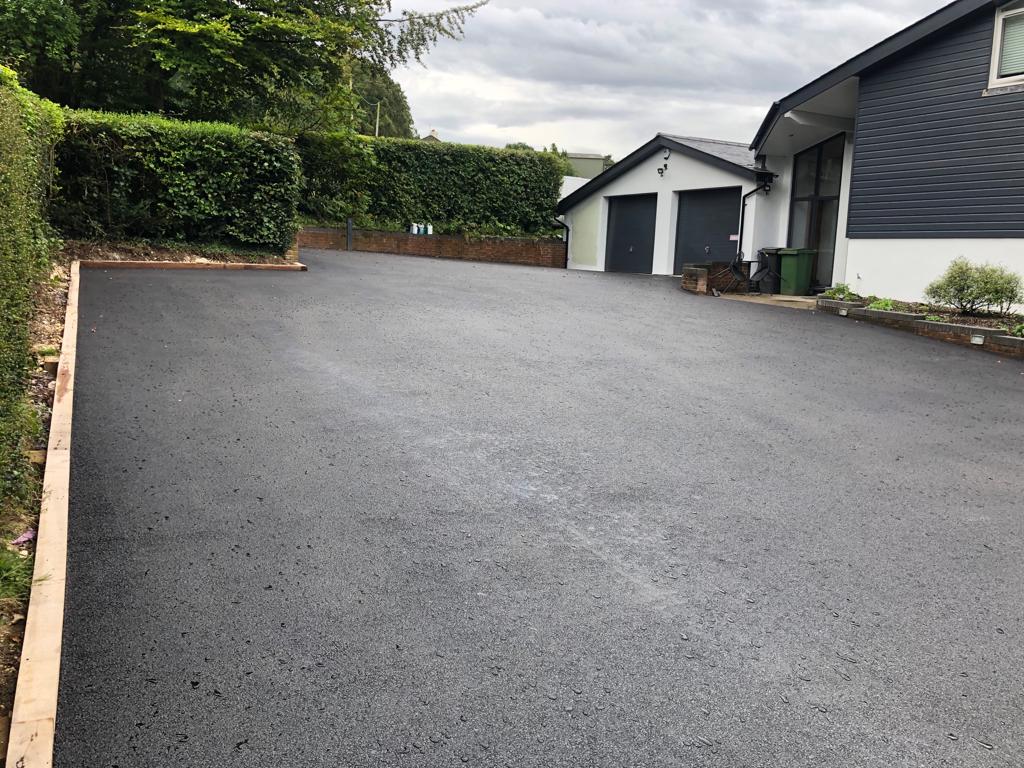
The edges of an asphalt surface can be among the first areas to show deterioration. Small cracks, crumbling sections or slight movement along the boundary may initially seem like isolated problems, but weakened edges can gradually affect a much larger part of the pavement. Once the edge loses support, traffic and water can accelerate deterioration and allow damage to move further into the asphalt.
For roads, driveways, accessways and commercial surfaces in Yatala, QLD, recognising edge deterioration early can help protect the wider pavement. At Yatala Surfacing Solutions, we provide professional asphalt and bitumen surfacing with careful attention to the complete pavement structure, including the foundation, drainage and edge support that influence long-term performance.
Why Are Asphalt Edges More Vulnerable?
The centre of an asphalt pavement is generally surrounded by other pavement material, which helps provide lateral support. At the outer edge, however, there may be less support available.
This makes pavement boundaries particularly vulnerable to stresses caused by vehicles, ground movement and water.
Common factors contributing to weak asphalt edges include:
- Vehicles repeatedly driving close to or over the edge
- Inadequate support beside the pavement
- Water washing away surrounding material
- Weak or poorly compacted base layers
- Existing cracking
- Erosion
- Heavy vehicle movements
Once deterioration begins, the unsupported section can become progressively weaker.
Edge Cracking Can Be the Beginning of Larger Problems
Small cracks along the pavement boundary should not automatically be dismissed as cosmetic.
Cracks create openings through which moisture can enter the pavement. They can also reduce the ability of the asphalt to remain connected as a continuous surface.
As vehicles continue travelling nearby, the cracked section may begin moving or breaking away. This exposes the next section of asphalt, effectively creating a new unsupported edge.
The deterioration can therefore gradually work its way further into the pavement.
Loss of Support Allows Asphalt to Break Away
Asphalt performs best when it is supported by a stable pavement structure underneath and suitable material alongside its edges.
If the supporting material beside the pavement erodes or settles, the asphalt may be left partially unsupported.
Vehicle loading can then cause the edge to flex beyond what it was designed to tolerate.
Over time, this can result in:
- Crumbling
- Broken pavement edges
- Widening cracks
- Localised depressions
- Sections separating from the main pavement
Repairing the visible asphalt without restoring adequate support may allow the problem to return.
Vehicle Traffic Can Accelerate Edge Failure
Repeated vehicle movements near a weakened edge can rapidly increase deterioration.
This is particularly important on narrower accessways or areas where vehicles regularly move towards the pavement boundary to pass, turn or manoeuvre.
Heavy vehicles create even greater stresses because their wheel loads can place significant pressure on unsupported sections.
Turning Movements Deserve Particular Attention
Vehicle tyres do not only apply downward pressure. During turning and manoeuvring, additional forces are placed across the pavement surface.
If these movements regularly occur near an already weakened boundary, pieces of asphalt can loosen and break away more quickly.
Keeping the pavement structurally supported in these high-use areas is therefore important for long-term durability.
Water Can Turn Edge Damage into Structural Deterioration
Water is another major reason damaged edges can lead to wider pavement problems.
Once an asphalt edge cracks or breaks away, moisture has easier access to the supporting layers underneath. If these materials become saturated, they can lose strength.
Traffic then places pressure on the weakened pavement, potentially causing settlement and further cracking.
Water can also erode material alongside the pavement, reducing lateral support and leaving even more asphalt exposed.
This creates a cycle in which:
- The pavement edge becomes damaged.
- Water enters or erodes supporting material.
- The foundation becomes weaker.
- Traffic causes further movement.
- Damage progresses towards the centre of the pavement.
Breaking this cycle requires attention to both the damaged asphalt and the conditions contributing to it.
Poor Drainage Can Make the Problem Worse
Where water regularly flows along a pavement edge, the surrounding material can gradually wash away.
Low sections can also allow water to remain beside the asphalt after rainfall.
Good pavement design should direct water away efficiently without allowing concentrated runoff to undermine the edges.
When recurring edge damage is present, professional assessment should therefore consider drainage as well as the asphalt itself.
Correcting water movement can be just as important as repairing the visible damage.
Edge Damage Can Lead to Potholes
Potholes do not always begin in the middle of a road or driveway.
Where edge deterioration allows water to enter and pavement material to become loose, the damaged area can expand under repeated traffic. As more material breaks away, a depression can form and eventually develop into a pothole.
If this process continues, the pothole can extend further across the pavement.
Early edge repairs can therefore form an important part of preventing more extensive surface deterioration.
Look for Early Warning Signs
Property owners do not need to wait until large pieces of asphalt have broken away before investigating the condition of the pavement.
Early warning signs can include:
- Fine cracks running along the edge
- Small pieces of loose asphalt
- Gaps between the pavement and surrounding ground
- Soil or base material washing away
- Minor edge settlement
- Water collecting beside the pavement
- Tyre damage along frequently used boundaries
Changes in these areas are worth monitoring because deterioration can progress once structural support starts being lost.
Why Simply Patching the Edge May Not Be Enough
A localised asphalt repair can be appropriate in some circumstances, but the reason for the failure should also be identified.
If erosion, poor drainage or an unstable base caused the original damage, replacing only the broken asphalt leaves those conditions unchanged.
A more complete repair may involve correcting the underlying pavement, restoring edge support, improving drainage and then reinstating the asphalt.
This approach addresses the cause rather than repeatedly treating the visible symptom.
Strong Edge Support Protects the Wider Pavement
Maintaining appropriate support around the perimeter helps the entire pavement perform more consistently.
Stable edges reduce unnecessary movement and help the asphalt withstand normal traffic loads. They also reduce opportunities for water to penetrate vulnerable areas of the pavement structure.
For new asphalt construction, edge stability should therefore be considered during preparation rather than treated as an afterthought once the surface has been installed.
When Does Wider Resurfacing Become Necessary?
Early edge deterioration can often be relatively localised. However, once cracking and structural weakness have progressed well into the pavement, repairing individual sections may no longer address the overall condition.
More extensive work may be worth assessing when there is:
- Widespread cracking extending from the edges
- Numerous failed sections
- Recurring potholes
- Significant pavement movement
- Extensive base deterioration
- General ageing across the asphalt surface
Where the underlying structure remains suitable, resurfacing may provide an effective way to renew the pavement. If the base has also failed, additional reconstruction may be necessary first.
Professional Assessment Helps Identify the Real Cause
Weak asphalt edges can develop for several different reasons, and the appropriate solution depends on what is happening at the site.
An experienced surfacing contractor can assess the condition of the asphalt, underlying pavement, edge support, drainage and traffic patterns before recommending work.
For properties in Yatala, QLD, this means repairs can be based on the actual cause of deterioration rather than simply covering damaged areas and waiting to see whether they return.
Conclusion
Weak asphalt edges can lead to wider surface damage because once the boundary loses support, traffic, moisture and erosion can progressively weaken the surrounding pavement. Cracks can widen, asphalt can break away, water can reach the base and deterioration can gradually move towards the centre of the surface.
Early attention is therefore important. Restoring pavement support, correcting drainage problems and repairing damaged asphalt before deterioration spreads can help preserve the strength and usability of the wider surface.
Yatala Surfacing Solutions provides professional asphalt repairs, resurfacing and bitumen surfacing throughout Yatala, QLD. If the edges of your driveway, road or commercial pavement are beginning to crack, crumble or lose support, contact our team to arrange an assessment and discuss an appropriate solution for restoring a durable and dependable surface.
Call us on: 07 3113 9392
Click here to find out more about Yatala Surfacing Solutions
Click here to complete our contact form and see how we can help with your driveway needs.